

For some people who drink heavily while maintaining a career and family responsibilities, finding time for treatment can be a significant barrier. Stepping away for weeks of residential care can feel impossible when there is a job, a family, and a mortgage to maintain.
This is exactly where an intensive outpatient program, or IOP, can fit. “High-functioning alcoholism” is an informal term for a person with alcohol use disorder (AUD) who keeps up work and outward responsibilities despite problematic drinking. IOP provides a structured outpatient setting in which evidence-based AUD treatments can be delivered, often with schedules that allow people to continue some work and family responsibilities. If drinking has become hard to control, our professional alcohol addiction treatment in Denver can help you find the right level of care.
What Is an IOP?
An intensive outpatient program is an outpatient level of addiction treatment that provides more clinical hours than standard outpatient care but less intensity than high-intensity outpatient or residential treatment. Rather than living in the treatment facility, participants attend structured clinical services and live in the community, sometimes at home and sometimes in a recovery residence, which allows them to keep working and stay connected to family. More intensive outpatient care may also be called high-intensity outpatient treatment or, in some healthcare systems, partial hospitalization. The right choice depends on an individual assessment rather than convenience alone.
For someone who wants to maintain work or family responsibilities while receiving clinically appropriate treatment, the outpatient format may be appealing. It provides real clinical support without requiring a person to step away from their responsibilities, and its flexibility may reduce practical barriers to treatment. Understanding what a functional alcoholic really is helps explain why a flexible option often removes a major obstacle to seeking help.
IOP Treatment for High-Functioning Alcoholism: How It Works
Quality IOPs typically combine multiple evidence-based or evidence-informed services within a structured weekly treatment plan. The goal may be abstinence or a substantial reduction in drinking, depending on the treatment plan, while also developing coping skills and strategies for maintaining change. Because participants remain in their everyday environments, they can practice new coping and recovery skills in situations where drinking triggers or challenges actually arise. A helpful overview of how an intensive outpatient program is structured can give a fuller picture of what to expect.
How Does IOP Treat Alcoholism?
How does IOP treat alcoholism? Through a blend of therapies rather than any single method. Programs commonly draw on approaches with strong research support, including cognitive behavioral therapy to identify and change unhelpful thought patterns, motivational work to strengthen commitment to change, group therapy for peer support and accountability, and relapse-prevention planning.
For some people, FDA-approved medications such as naltrexone, acamprosate, or disulfiram may also be considered as part of treatment. Co-occurring mental health conditions such as anxiety or depression should also be assessed and treated or coordinated alongside AUD care.
One important note: a standard Level 2.1 IOP is not a substitute for medically managed alcohol withdrawal. People at risk for clinically significant withdrawal should be medically assessed before abruptly stopping, because some require supervised withdrawal management, and stopping suddenly can be dangerous. Current ASAM criteria also include medically managed outpatient levels for those who need withdrawal or medical services outside an inpatient setting.
What Do You Do in an Alcoholic IOP?
What do you do in an alcoholic IOP day to day? While every program differs, most sessions blend group and individual work aimed at building practical skills. A typical week might include:
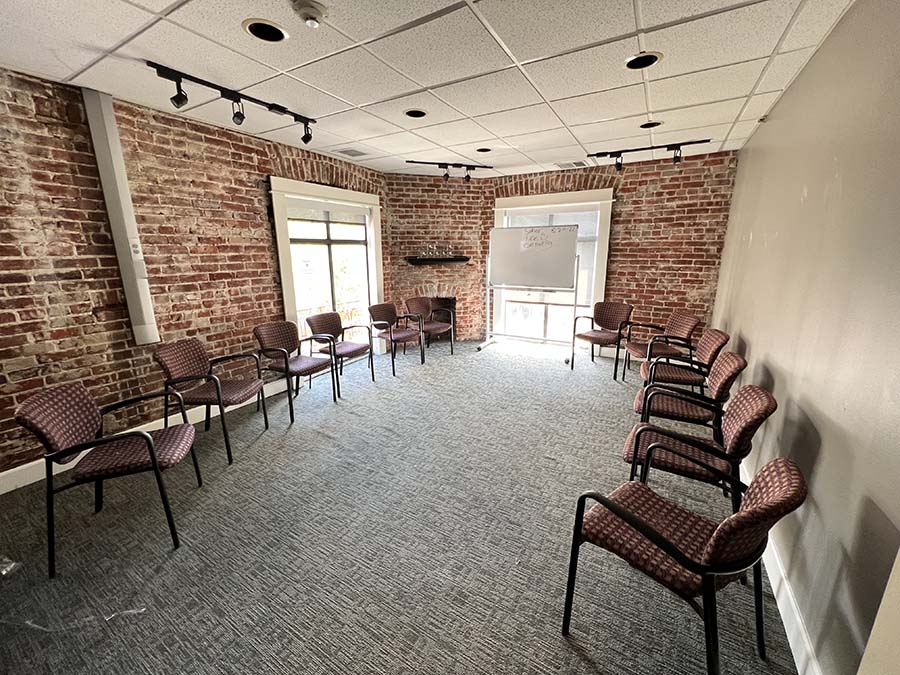
- Group therapy sessions focused on coping skills, triggers, and shared experience
- Individual counseling to address treatment goals, current challenges, relapse risks, and personal issues needing focused attention
- Education about alcohol, the brain, and how dependence develops
- Relapse-prevention planning tailored to your specific high-risk situations
- Skills practice for stress, emotions, and difficult relationships
- Family sessions or referrals, when appropriate, to repair and strengthen support
Group work is often at the heart of the experience. Exploring common IOP group therapy topics shows how sessions may address stress, coping, relationships, triggers, and other factors that can contribute to drinking or make recovery more difficult.
Wondering whether IOP fits your schedule?
Take the first step towards recovery today. Our team is ready to help you reclaim your life.
How Long Is an IOP for Alcohol?
How long is an IOP for alcohol? There is no single answer, because length depends on the person’s needs, progress, and program design. Under the current ASAM Criteria, adult Level 2.1 intensive outpatient treatment generally provides 9 to 19 hours of clinical services per week. Those hours are often spread across several days each week, although schedules vary by program. Treatment may last several weeks or months, but current ASAM guidance emphasizes adjusting the duration and level of care according to clinical progress rather than using a fixed length of stay. Some people step down to less intensive care as they stabilize, while others extend their time to reinforce progress.
The schedule matters just as much as the total length. Programs frequently offer daytime or evening tracks so participants can attend around work. For a fuller breakdown, this guide on how long IOP typically lasts explains the common ranges and what influences them.
IOP Compared to Other Levels of Care
IOP is one option along a continuum. The table below outlines how it compares using current ASAM Fourth Edition terminology, though the appropriate level should always be based on a clinical assessment of factors like withdrawal risk, medical and mental health needs, and recovery environment.
| Level of Care | Typical Structure | Often Suited To |
|---|---|---|
| Outpatient (Level 1.5) | Less than 9 hours of clinical services weekly | Milder needs or ongoing maintenance |
| Intensive outpatient (Level 2.1) | 9 to 19 hours weekly, living outside the facility | Those needing structure who can participate safely in the community |
| High-intensity outpatient (Level 2.5) | At least 20 hours weekly; some systems call this partial hospitalization | More intensive needs without overnight care |
| Residential (Level 3) | 24-hour treatment and living support at a facility | Needs or environments that outpatient care cannot safely manage |
Choosing between these is not about willpower or how “bad” the problem looks. It is a clinical decision. Comparing IOP, PHP, and residential care side by side can help you and a provider find the right starting point.
Is IOP a Good Fit?
IOP can be a strong option for many people with high-functioning AUD, though it is not right for everyone. It tends to fit well when someone:
- Can participate safely outside a residential treatment facility, and, if the home environment is not sufficiently supportive, an outpatient level can sometimes be combined with a recovery residence
- Does not have withdrawal or medical needs that exceed what the selected outpatient program can safely manage, or has received appropriate withdrawal management first
- Needs substantially more structured clinical support than lower-intensity outpatient care provides
- Has work or caregiving responsibilities that favor outpatient treatment when IOP is also clinically appropriate
- Is able to participate meaningfully in the program, with motivational support provided when ambivalence about change is present
If clinical needs cannot be safely and effectively managed at Level 2.1, another level or combination of services may be recommended after a professional assessment that weighs your specific circumstances rather than a self-diagnosis.
Frequently Asked Questions
How does IOP treat alcoholism?
IOP provides a structured setting for evidence-based AUD treatment, which may include cognitive behavioral therapy, motivational approaches, group and individual counseling, medications, and relapse-prevention work. Co-occurring mental health conditions are assessed and addressed too. Care is tailored to each person and delivered while they live in the community.
What do you do in an alcoholic IOP?
You take part in structured sessions several times a week, usually a mix of group therapy, individual counseling, education about alcohol and recovery, and skills practice for triggers and stress. Many programs also involve family work and build a personalized relapse-prevention plan as you progress.
How long is an IOP for alcohol?
It varies by program and individual needs. Under current ASAM criteria, adult Level 2.1 IOP generally involves 9 to 19 hours of clinical services per week, often across several days. Treatment often continues for weeks or months, but duration should be individualized according to progress rather than predetermined.